Спеціалізація з NLP від DeepLearning.AI: шлях до майстерності для лідерів бізнесу
Відео представляє спеціалізацію DeepLearning.AI з обробки природної мови з участю Эндрю Нг, Унуніса та Лукаса. Описано чотири курси: від аналізу настроїв та векторних представлень до ймовірних моделей, послідовностей та механізмів уваги, що ведуть до сучасної NLP. Студенти навчаться створювати чат‑боти, системи питання‑відповідь та підсумовування тексту.
Ключові тези
- Охоплює аналіз настроїв, векторні простори, ймовірні моделі, послідовності та механізми уваги.
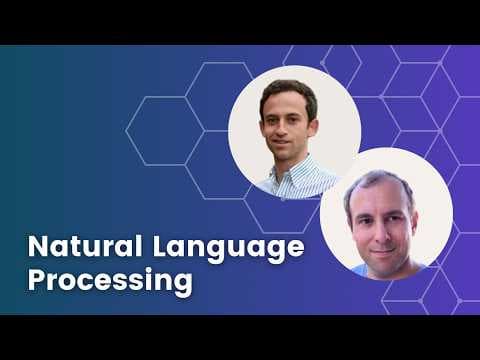
- Викладачі: Эндрю Нг, професор Стэнфорду Ununice та Лукас з Google Brain, співавтор TensorFlow та Transformer.
- Підготовлює до створення готових NLP-розв’язків: чат-ботів, систем питання-відповідь та підсумовування.
🟢 Можливості — одразу застосовувати навчені моделі для автоматизації підтримки клієнтів, створення внутрішніх баз знань та покращення аналізу зворотного зв’язку. 🔴 Загрози — недооцінка вимог до інфраструктури (GPU, об’єм даних) може призвести до розчарування та витрат на непідготовлені проєкти. Бізнесу слід планувати пілотні тести з чіткими KPI перед масштабуванням.
Хоча курс позиціонується як доступний для початківців, його четвертий модуль вимагає глибокого розуміння лінійної алгебри та PyTorch/TensorFlow, що може ставити бар’єр для тих, хто не має досвіду з глубоким навчанням. Це означає, що реальна цінність спеціалізації проявляється у поєднанні з попередньою підготовкою, а не як самостійний «швидкий старт».
Опис відео▼
I want you to meet my friends Ununice and Lucas, the instructors of this specialization. >> Hi everyone, >> welcome to the specialization. >> I've known Ununice for many years. He is an instructor at Stanford University and had also helped me create the deep learning specialization. Over the years, Ununice has taught hundreds of students learning AI and machine learning and NLP and other topics for the first time. and he's also mentored students on a huge variety of AI related projects. So I'm really thrilled to have Ununice with us. >> Thanks for the introduction and it is always great working with you. >> Lucas is a member of the Google brain team where he does research on deep learning and NLP. So everything from machine translation to parsing. He is a co-author of Google's TensorFlow system as well as of the transformer network. And so his work has had a huge influence on all of NLP and AI. I'm really excited to also have Lucas as an instructor of the specialization. >> Thanks for the introduction, Andrew. >> Ununice and Lucas will walk you through the most important concepts in natural language processing. NLP has changed a lot over the last several decades. The field has started off using primarily rule-based systems where someone might code up a rule like if you see the word good then assume this is a positive customer review to then using probabilistic systems that perform much better but still require a lot of hand engineering to now where NLP relies much more on machine learning and deep learning. More recently, with the rise of powerful computers, we can now train end-to-end systems that would have been impossible to train a few years ago. We can now capture more complicated patterns. And we can use these models in question answering, in chat bspots, and in other applications. Many of these applications are built with attention models, which you are going to learn in this specialization. [snorts] A few years ago, these models would take weeks or even months to train. But with attention, you can train these models in just a few hours. >> In this specialization, you learn to build NLP technologies, including the same technologies as what's deployed in many large commercial systems. In the first course, you learn about classification and vector spaces. Ununice, can you tell us a bit about the first course? >> Sure. In course one, you will learn to distinguish between pieces of text with positive sentiments and negative sentiments. You'll do so using logistic regression and naive base classifiers. You'll also learn to represent words, queries, and documents, including other pieces of text, as numbers in vectors. You'll build your first machine translation system, and you'll learn about locality sensitive hashing, which is just a method that will help you with efficient search. >> Thanks, Unice. After the first course, you then go on to the second course in which you learn probabilistic models in NLP. So these are things like given a few words, what is the probability of the next word being the word the versus of versus something else. So these are algorithms that all of us are maybe using almost every day. And in this specialization, you will learn how to build these algorithms yourself. After the first two courses with the foundation that that gives you, you then go on to the third course which teaches you sequence models. And finally, in the fourth course, you learn about attention models. And this will take you up to state-of-the-art NLP models used for things like chat bots, question answering, and text summarization. Ununice, do you want to say a few words about that? By the time you complete course 4, you'll be able to implement state-of-the-art neural machine translation, summarization, question answering, and chat bots. We will show you how you can combine attention and parallel computing to build these systems from the ground up. These models have high impact in industry. They could be used, for example, to automate call centers or businesses can use them to make sense of large volumes of data. I'm really excited for everyone to get started, to take these courses, learn these technologies, and to go build some great NLP systems. >> Let's get started. >> Awesome. See you in the classroom. Let's jump in.