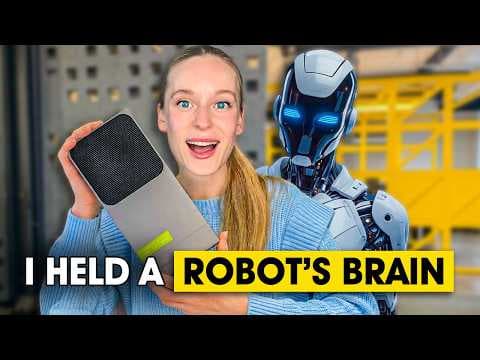
NVIDIA GTC 2026: як AI змінює робототехніку та автономний транспорт
NVIDIA на GTC 2026 показала робота над роботами, які «мислять», завдяки Jetson Thor. Це дозволить роботам швидше адаптуватися до змін у реальному світі. Також продемонстрували прогрес у самокерованих авто, де AI імітує стиль водіння людини.
Ключові тези
- NVIDIA використовує Jetson Thor для створення роботів, здатних до самостійного мислення та прийняття рішень.
- Відкрита ОС OM1 для роботів дозволяє розробникам створювати та встановлювати нові навички через магазин додатків.
- Самокеровані авто NVIDIA використовують AI, навчений на даних водіння людей, для більш плавного керування.
Зменшення вартості розробки роботів завдяки відкритим інструментам та платформам • Прискорення впровадження роботів у різних галузях, від виробництва до медицини • Створення нових робочих місць для фахівців, які розуміють проблеми та можуть використовувати AI для їх вирішення
Відкрита платформа OM1 може прискорити розвиток робототехніки, але також створить ризики безпеки та етичні питання.
Опис відео▼
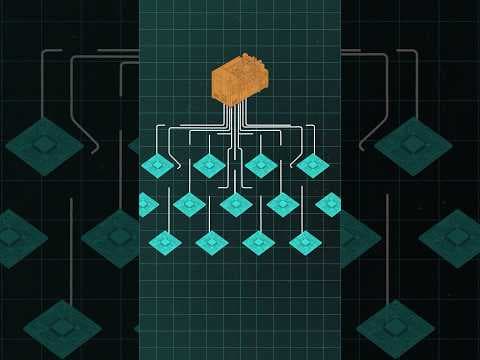
Okay, so I just rode in a self-driving Mercedes through San Francisco with NVIDIA's tech stack. And honestly, this is a route I would never choose to drive by myself. I mean, it's crazy. The traffic, the cyclist, the people. But here's the thing, this actually is not what this video is about. Because before I got in that car, I spent the week at GTC holding the robotics computer that really makes this all possible. And also, talking to the people that are building the software that [music] tell it what to do. All right, let me take you back to the beginning of the week. >> [music] >> This is GTC 2026. I mean, half of the floor is robots, humanoids, quadrupeds, arms, all of them need a brain. [music] So I sat down with Spencer Huang. He leads NVIDIA's robotics software products, things such as Isaac Groot, Cosmos. And he had a Jetson Thor sitting on the table in front of us. I am so excited. We have a Jetson Thor sitting on the table here, and I want to hear from you, when this is inside a robot, [music] what happens between when a robot sees something to then when it actually takes its first action, its first movement? What's going on? Can you walk me behind the scenes? >> Sure. So, there's two there's two types of stacks that we have. Um one of them are the the classical stacks where you have these perception models that are run. >> So, two systems working together. System two reasons. It looks at the scene, understands what's being asked, [music] plans the approach. System one acts. It takes the plan and moves the robot. On Jetson Thor, they're combined. Image comes in, reasoning happens, action comes out, all on the device. But Spencer said something about where this is going that honestly, I can't stop thinking about. In the future, we'll see something totally different, I think, because we have these world models. How do I take a frame in and use it as conditioning to approximate what's going to happen next? The robot is imagining multiple futures milliseconds ahead and checking those predictions against what is actually happening. And it does this continuously. [music] That's not a robot running a program. That's a robot building a mental model of the world and updating it live. All right, but before we get started, I want to say a big shout out to Incogni who sponsored this video. So here is something that will freak you out, if you will. Google your full name and your city right now. There is a very good chance your home address, >> [music] >> phone number, email, I mean, even your relatives' names are just sitting there on sites that you've never even heard of. Data brokers, what they will do is they collect and sell this information without your permission. And it's used for everything from spam to identity theft to actual stalking. Incogni contacts these brokers on your behalf and gets your data removed. Now, the whole process is automated across hundreds of known broker sites. And with the unlimited plan, you can get custom removals, which means you can send Incogni any link where your info shows up, and their privacy team handles the takedown for you. Now, they are also the first data removal service independently verified by Deloitte. So this is not some fly-by-night operation. This is legit. So make sure to go take back your personal data with Incogni. Use the code Tiff and Tech for 60% off an annual plan. Link is in the description. NVIDIA talks about three computers for robotics. We have DGX in the center for training data, Omniverse for simulation, and Jetson Thor for deployment. So basically, you train in the cloud, practice in a virtual world, and deploy on the real robot. It sounds clean, it sounds easy, but simulation and reality, they don't match. Now, luckily with simulation, you're always doomed to succeed, because you can always tune the simulation or the environment in order to succeed within the simulation. >> True. >> Right? But that's that's a falsity. It creates this it's a it's a trap, because just because you succeed in sim, the more you tune it to um accommodate the simulator, the further you're getting from the real platform. Doomed to succeed. That captures something engineers deal with constantly. You can make your test environment say yes to everything, but that doesn't mean production will agree. The gap depends on what you're doing. I mean, rigid objects, simulation works. A t-shirt, the fabric physics are so complex, you might be better off training in the real world. People that know the most valuable problems don't know how to code, because they're domain experts. The ability to use these technologies have always been slightly out of reach, and I think that's that's what's about to change. Yeah, a $200 robot. We've got people who weren't working in robotics before are now able to very quickly pick it up. And so you can start seeing the the gears turn their head like, oh, this is a future and it's not so far away. It's just that it was so inaccessible that it feels far away. Robotics felt far away because the tools were far away, not the problems. And now, the tools are open source. Isaac, [music] Groot, Cosmos. You can start building today. So I asked Spencer, what actually keeps him up at night? And I liked his first answer about the dog. Mostly, it's my dog. >> [laughter] >> If I have a an AMR that's running around and it and it has a failure case, and I look as and I look at the frames, and I have a reasoning model describe, okay, what happened in this frame? And it goes across and it says, okay, well, I found that I had the same kind of scenario, the same kind of task, but you know what's interesting is the lighting was so different. >> Yeah. CI/CD for robots. A robot fails in the field, the system figures out why, generates new training data, retrains the model, validates it in sim, and ships update. That's the data flywheel that makes physical AI scale. Now, they're not there yet, but Spencer said they're taking that playbook from the autonomous vehicle industry. Something that we have to take from the autonomous vehicle industry is how do you turn this into mass volume production of data, mass volume introspection of data? Absolutely. Even for example, with Open Mind and their their robotics app store, that's another kind of example as to how, you know, with openness and you can start start building with Spencer just put 2,000 teraflops of compute in my hands. That's a robot brain. And you can see what it's doing all over [music] this floor. Robots that walk, robots that carry, I mean, robots that build. But every one of them is still running its own software, locked into whatever the manufacturer shipped. Like when you think about the early days of phones before Androids showed up and said, what if one operating system could run [music] all of them? Now, there was someone at GTC making that exact bet for robots. Jan Liphardt [music] is a Stanford professor who started a company called Open Mind. Their product is OM1. It's an open-source operating system for robots. It really sits between the hardware and the robot's behavior. Any manufacturer can run it, which is pretty incredible. And in January, they launched a robot app store. You can download a new skill onto a robot the way you would download an app onto your phone. And over a thousand developers are building on it right now. Now, I spoke with Jan on the streets with some of his robots. Now, I want to talk to you about the dogs. This one I think is called Bits? >> Yes. Uh that's Bits, yes. So, what is the purpose for Bits, like a dog form robot? Most people love dog form factor robots, and kids come running, parents are generally happy. Very few people are scared of that form factor. But if you have a big humanoid, a lot of people initially are a bit apprehensive. So Hi, Bits. Good form factor. There's also a technical advantage to the dog form factor. It's more stable. Yeah. And if something goes wrong, it sinks gracefully onto its belly as opposed to face-planting. Some of the use cases we care about, like in old people's homes, we want the robot to find people and then make sure they're okay. What a lot of people underestimated in robotics is the degree to which most humans connect emotionally to robots. So my mom has Parkinson's, and I really wish there was something in the house that could find her and then make sure she's okay. And if there's any uncertainty, um connect the data with a human nurse that gets a notification and is then able to make good decision. That moment stuck with me. Jan's not building this because it's technically [music] interesting. He's building it because it is helping people, such as his mom who has Parkinson's. [music] I mean, the hardware exists, Jetson Thor can run the models, OM1 gives it the intelligence layer. The robot doesn't need to fold laundry, it needs to find a person, understand if they're okay in this example, and call for help if they're not. I thought it was such a powerful example. Spencer showed me the brain, Jan showed me what happens when you give that brain a purpose, and both of them kept pointing in the same direction. [music] All of the paths that they laid before us is what makes it so much easier for robotics. Like we it's not it's not easy, but it's easier than it it could have been if AV, you know, autonomous vehicles hadn't gone before us and had really started paving the way for what is simulation mean for these real-time constrained closed-loop systems. Spencer told me the autonomous vehicle industry paved the road for robotics. Their safety systems, simulation pipelines, data flywheels, all started in cars. So I wanted to see that side for myself. So NVIDIA put me in a Mercedes running their drive stack at L2++. And let me go explore downtown San Fran. This was really fun. This car, it has 10 cameras and five radars. And then for parking, we also have 12 ultrasonic sensors. From a software perspective, uh we have our Apple bio model that's doing about 95% of the driving here. The way I like to think about it is if you think about those like old school drivers' instructor cars that have like two steering wheels, two brakes, two gas pedals, uh we have our end-to-end model in the driver's seat, right? And we have our classical stacks sitting in the passenger seat with an extra set Oh, that's interesting. Yeah. And so that way, it's always kind of making sure that the the model does what you want it to do. Two brains in one car. The AI model drives, the classical stack watches. If the AI tries something unsafe, the safety stack will override it. Now, the driving feels smooth because the AI model was trained on human driving data. It learned how humans accelerate, merge, [music] take turns. Sometimes we're not so patient. So, the car is engaged, right? So, this is now George now, this is the car. So, then in the end model, right? You give it enough lane change data, right? It learns sometimes, you know, to I need to accelerate into this slot, sometimes I need to slow down and go into this lane, right? So, it gets that much more natural balanced feeling where the car feels like you're I'm driving or you're driving. >> Yeah. Yeah. It's like watching like a 16-year-old learn how to drive, then it's a 20-year-old, and as it gets better and better, right? The car can handle a wider variety of scenarios and >> What age are we at now? Yeah, I'd say this is like a good, you know, mid-30s safe driver. That's a good driver, right? Let's say there is a pothole in the road, right? So, George wants to steer around the pothole. The system can stay engaged, he can take over steering temporarily, and then let go, and the car will resume driving. Ah, that's how it will just Right when you let go, it will start again. Yeah. We've been working on the Apollo side for a little over a year, right? So, to get to this kind of driving quality, it's been about 2,300 models, right? That we've refined and uh yeah, employed to get to this point. We'll do a beta in Q2 of this year, and then it'll be uh a nationwide rollout by the end of the year. So, we have, you know, our deal that we announced with Uber, right? This week with GTC where we'll be level four robotaxi capabilities in LA and San Francisco, right? Next year in 20 cities by you know, 2028. I think we'll see that in the next couple of years. Yeah. Basic principles, right? Or what we can then scale up. Yes. And at that point, right? So, we'll have bigger models that are taking in more sensor input, right? We'll have, you know, improved computing power, right? We'll have more sensors, right? So, yeah, if you think of this as just our baseline, right? You can imagine given another couple of years, right? You know how much better it'll be. And I think it'll make the roads generally safer, right? And you know, I think about someone like a mom who doesn't like driving but has to drive, right? So, if we get to the point say, "Take me to the store." Right? And the car can easily handle that. Uh I think that will really help people that, you know, maybe get nervous about driving or anxiety while driving. Okay, on a non-technical note, don't you find it interesting that two people who are innovating in this space told me about their [music] moms today? I mean, Yiannis wants a robot that can check on his mom who has Parkinson's. Arman wants a car that can drive his mom who maybe gets a little bit nervous behind the wheel. Both of those things are being built at the same time on NVIDIA compute platform. I held a Jetson Thor that runs 2,000 teraflops. Then I also watched a dog robot named Bits have a conversation with me. I sat in a car that drove itself through downtown San Fran after 2,300 model iterations. Spencer said about 2,300 iterations. It's incredible. The same architectures, simulation pipelines, I mean, same philosophy, but different bodies. And the tools to build on this are open. Isaac, Groot, Cosmos, 011. Spencer told me the people who will build demos and important things in physical AI aren't necessarily the ones with robotics PhDs. They're the domain experts, the people who know what problems actually matter. A lawyer, a real estate agent, a doctor. In the hackathon example, they won that hackathon. It's incredible. And if you want to go deeper on any of this with me, leave down in the comments. [music] I mean, the sim to real problem, the world models, think about the safety challenges. There's so many interesting things that this tech will cover. And I love that it really starts with NVIDIA and in this video with Thor, which is pretty exciting. >> [music] >> I hope you enjoyed this video. It was so much fun to make and just to get out into GTC, explore what the best tech has to offer and where it's all headed. Curious to get your thoughts on all [music] of this tech. Leave in the comments. I'll see you in the next video.